Do not hesitage to give us a call. We are an expert team and we are happy to talk to you.
1.8445.3356.33
Help@goodlayers.com
Eight days with short stages. Days two and five carry the most road; the rest leave free afternoons.
Pick-up at your riad or hotel in Fez, or at its airport. We drop you in Marrakech.
Between 7:00 and 8:00 in the morning, depending on the season.
Eight days with short stages. Days two and five carry the most road; the rest leave free afternoons.
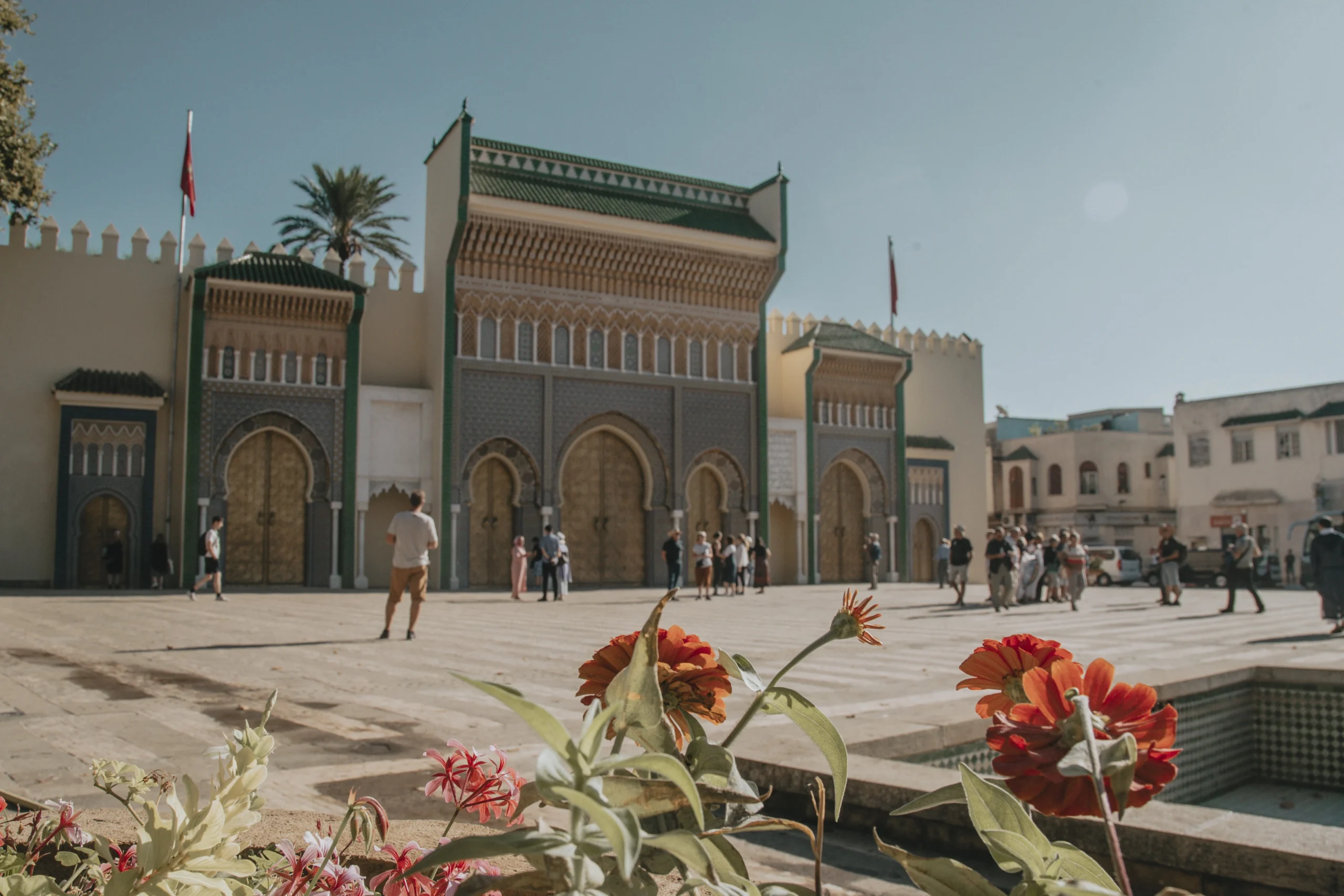
We collect you and give the whole day to the medina, on foot. Fez el Bali is the largest car-free urban area in the world: around nine thousand lanes where everything still moves by foot or by donkey.
We see the Bou Inania madrasa, from the fourteenth century, with its carved cedar and plasterwork, and the courtyard of the Al Qarawiyyin university, founded in 859 and considered the oldest continuously operating university anywhere.
We climb to the terraces of the leather workshops to look down on the Chouara tanneries, with their lime and natural dye pits, a system that has barely changed in a thousand years.
The rest of the day is for the souks, organised by guild since the Middle Ages: coppersmiths, dyers, cabinetmakers, the spice market. Dinner and overnight in a riad in the medina.
We head south and within an hour the landscape changes completely. We stop at Ifrane, the mountain town of pitched roofs the French built in the 1930s, and at the cedar forest of Azrou, where Barbary macaques gather by the Gouraud Cedar.
We cross the Middle Atlas at Midelt, in the corridor between the two ranges, and from there the vegetation gives out and the stony plateaux begin.
The last stretch runs down the Ziz valley, a palm grove tens of kilometres long wedged between red walls, with a viewpoint where the river and the palms run out of sight. Dinner and overnight in the Erfoud area.
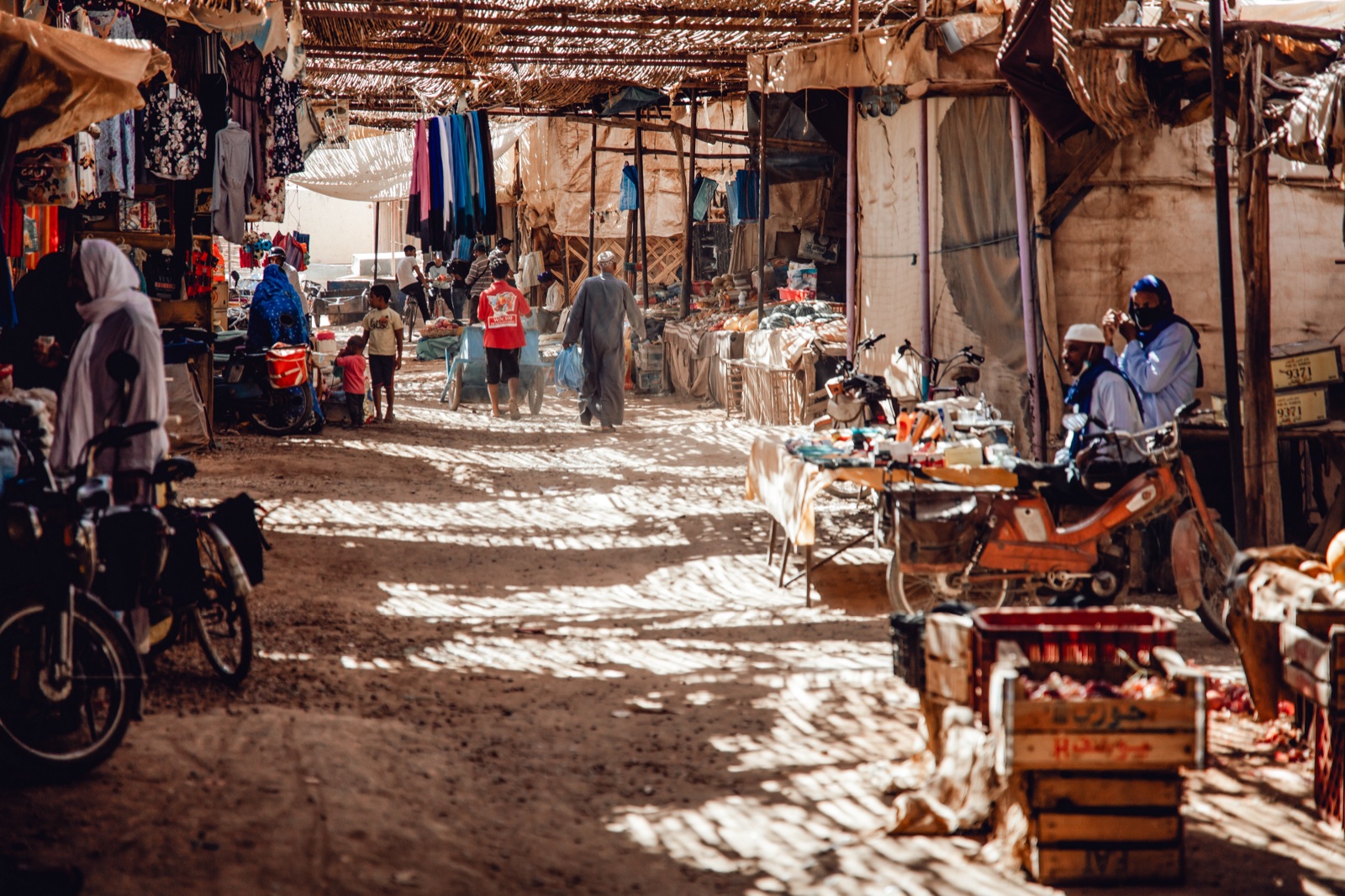
We start in Erfoud, capital of the fossil trade, then Rissani, built over the ruins of Sijilmasa, from which the gold caravans left for Timbuktu. The souk runs on Sundays, Tuesdays and Thursdays and is still a working local market. We eat medfouna, the stuffed flatbread baked under hot sand.
In the afternoon we move towards Merzouga and, depending on the season, out to Dayet Srji, the seasonal lake where flamingos stop in spring, or to Khamlia, where gnawa music is played live.
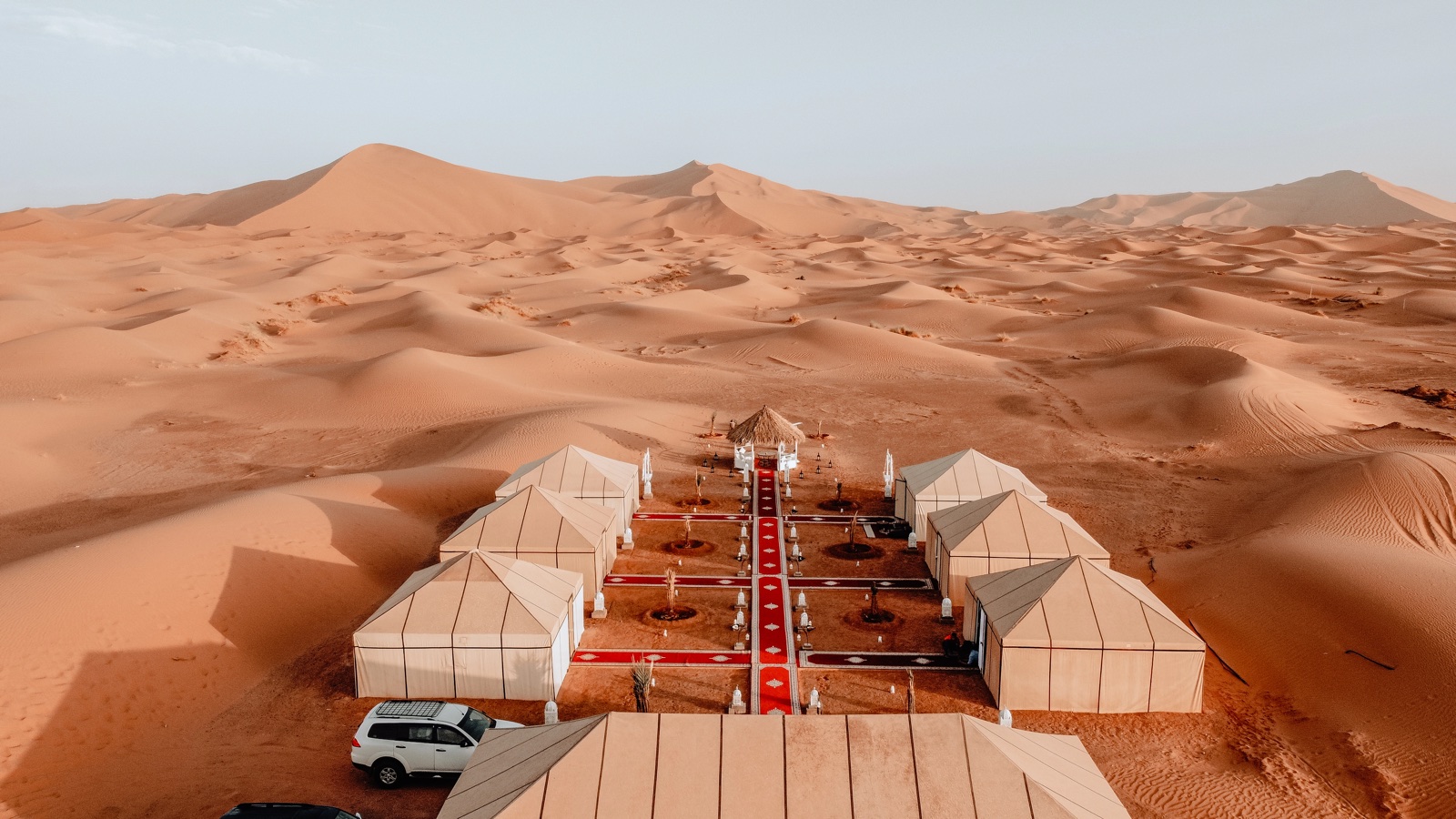
As the light drops we swap the car for a camel and ride into Erg Chebbi, dunes reaching 150 metres. An hour and a half in caravan brings us to the camp, with time to climb a dune for sunset. Berber dinner, drums by the fire and a night in a tent.
Up before dawn for sunrise over the erg, the sand shifting from grey to orange within minutes. We ride back to the village and have breakfast at the hotel, with time to shower and rest.
No long road today. Depending on the season we go out to Dayet Srji, and we visit Khamlia, the village founded by descendants of sub-Saharan populations where gnawa music is played live in the afternoons.
We can stop for tea at a nomad camp, or drive out to the abandoned mine workings at Mifis and the line where the sand meets the flat stony hamada.
If you want more, the afternoon takes a 4×4 run across the erg or an hour on a quad. Second night in the Merzouga area, hotel or camp as you prefer.
We head west through Tinghir, a long narrow oasis of palms between bare mountains, with a walk through the palm grove and the old adobe ksar above it.
We go into the Todra gorges: 300 metres of vertical wall narrowing to about ten metres, with the river running along the floor. We walk inside in the shade, usually with climbers on the routes overhead.
In the afternoon we drive up the Dades canyon, with its zigzag bends and the eroded rock formations people here call monkey fingers.
Dinner and overnight in the Dades valley or near the Todra, depending on the stage.
We take the Road of a Thousand Kasbahs west, stopping in the rose valley at Kelaat M Gouna, where Damascus roses have been grown for centuries and rose water is distilled in the village cooperatives.
On to the Skoura palm grove, a dense oasis hiding some of the best preserved kasbahs in the south, Amridil among them, the one that appears on the fifty dirham note.
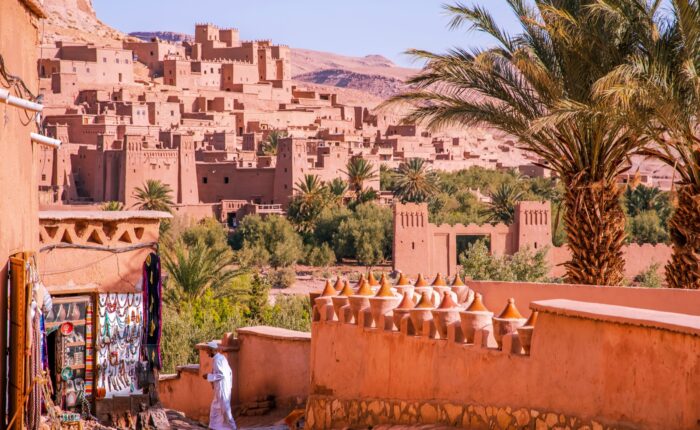
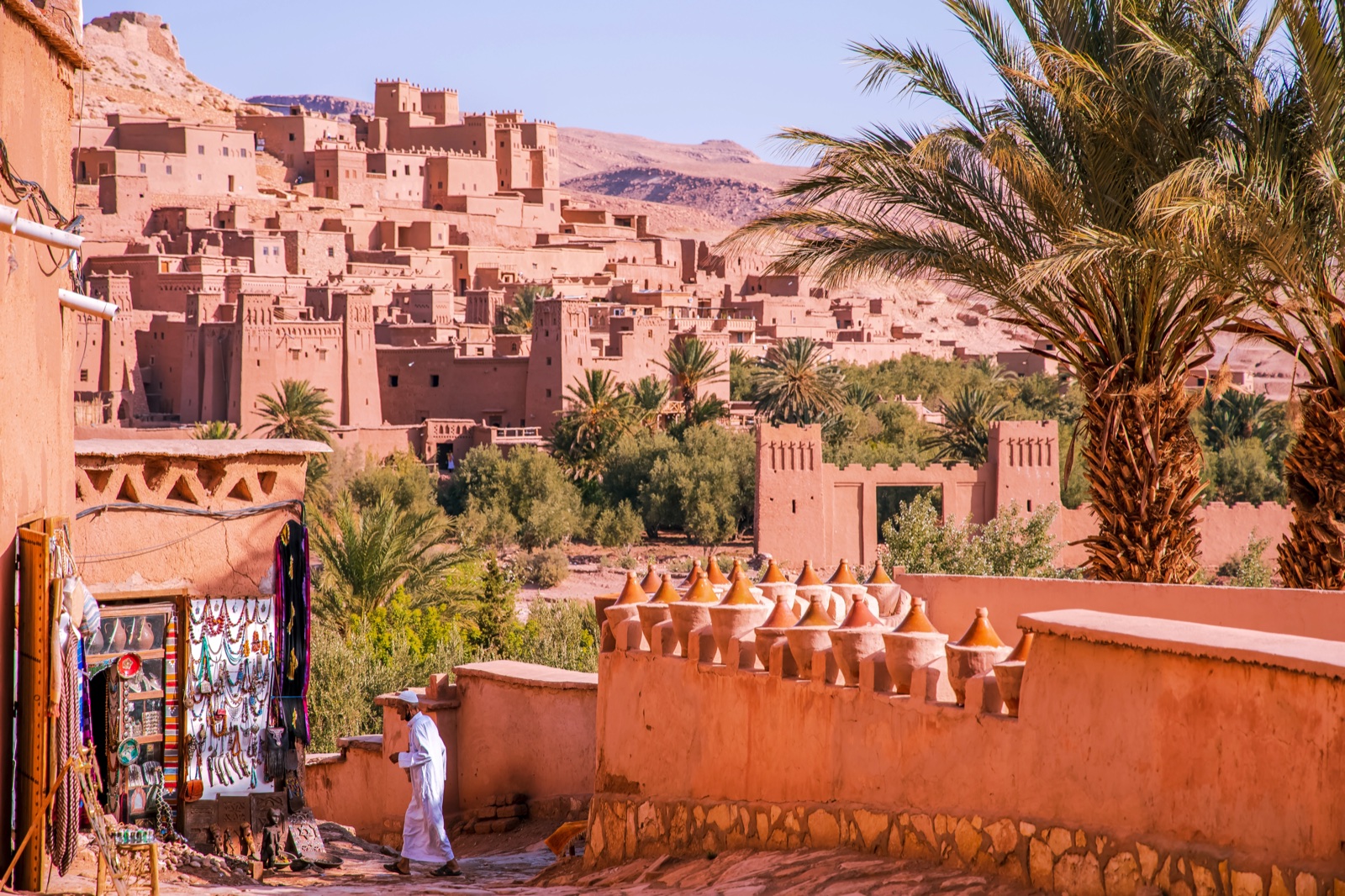
We pass Ouarzazate, with the Taourirt kasbah and the film studios, and reach Ait Ben Haddou with the low afternoon light, which is when the ksar looks its best. We cross the Ounila river and climb to the granary at the top.
Dinner and overnight near the kasbah or in Ouarzazate.
We start early at Ait Ben Haddou, while the ksar is still empty. We cross the Ounila river and climb between the earthen houses to the granary at the top, the whole valley below. UNESCO listed since 1987 and a film set for half a century.
Then we take the old road up the Ounila valley, a narrow and little used route that follows the river between adobe villages and old olive presses, the way people travelled before the Tichka existed.
We finish at the Telouet kasbah, the ruined palace of the Glaoui family, who controlled southern Morocco until independence. From outside it is falling apart; inside there are cedar ceilings and whole rooms of tilework still standing.
Dinner and overnight in the area.
A last morning in the south. If you fancy the detour, we drive up the Ounila valley to the Telouet kasbah, the Glaoui family ruin with cedar ceilings and tiled rooms inside a building that is otherwise collapsing.
We cross the High Atlas by the Tizi n Tichka at 2,260 metres, stopping at the viewpoints for a final look at the southern slope.
Down through Berber villages and terraced fields to the plain, with the range behind us.
We reach Marrakech in the afternoon and leave you at your riad or at the airport.