Do not hesitage to give us a call. We are an expert team and we are happy to talk to you.
1.8445.3356.33
Help@goodlayers.com
A three day route that starts in Marrakech and ends in Fez, crossing the desert rather than going around it. You sleep one night in the Dades valley and another in a Berber camp in the dunes of Erg Chebbi.
It is a private tour: you travel with your own group and your own driver-guide, and nothing is shared.
Pick-up at your riad or hotel in Marrakech. We drop you at your accommodation in Fez or at its airport.
Between 7:00 and 8:00 in the morning, depending on the season.
Three driving days with frequent stops. The landscape changes completely every few hours: the Atlas peaks, the Draa palm groves, the red rock of the Todra and the sand at Merzouga.
We collect you from your riad between 7:00 and 8:00 and leave Marrakech heading south. The road begins climbing almost immediately and in a little over two hours we cross the Tizi n Tichka pass at 2,260 metres, the highest road over the High Atlas open year-round. We stop at the viewpoints and in the Berber villages on the slope, where walnuts, argan oil and minerals are sold at the roadside.
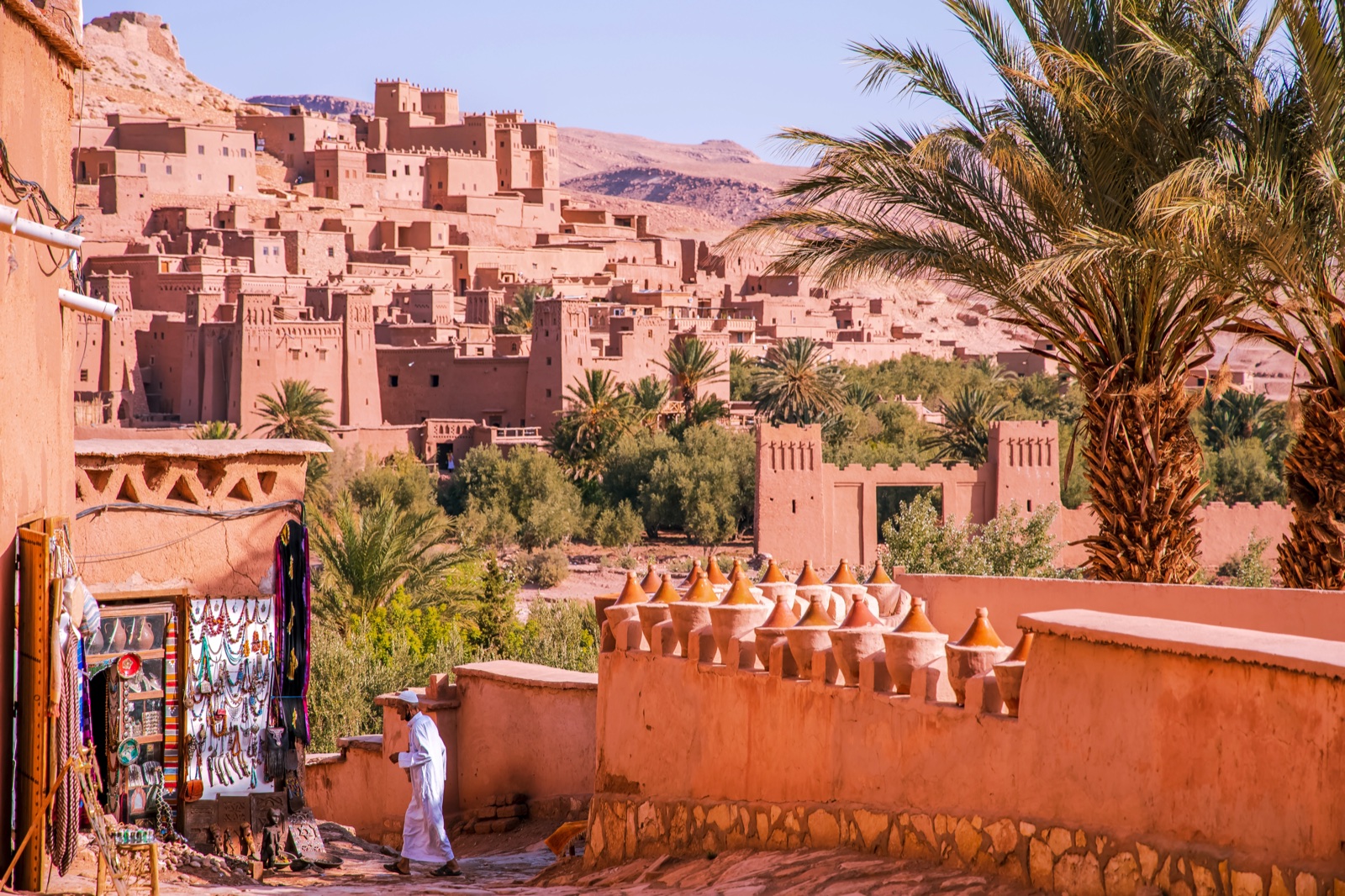
Coming down from the pass we turn off towards Ait Ben Haddou. The ksar is a cluster of earthen houses packed onto a hill above the Ounila river, a UNESCO site since 1987 and the backdrop to dozens of films. We cross the river and climb to the granary at the top, from where the whole valley opens out. We stop here for lunch.
In the afternoon we continue to Ouarzazate, the gateway to the desert, and follow the Road of a Thousand Kasbahs east. We pass through Skoura and its palm grove, then the rose valley at Kelaat M Gouna, where rose water is distilled in May. We reach the Dades valley at dusk, when the light turns the canyon walls red.
Dinner and overnight at a hotel in the Dades. Around six hours of driving spread across the day, with as many stops as you want.
In the morning we climb through the Dades canyon, with its zigzag bends and the eroded rock formations known as monkey fingers. Then we head east to Tinghir, a long oasis where the palm grove runs between two mountains.
We enter the Todra gorges, the best known in the south: 300 metres of vertical wall and a gap of barely ten metres where the river runs. We walk along the floor of the defile in the shade, usually with climbers overhead.
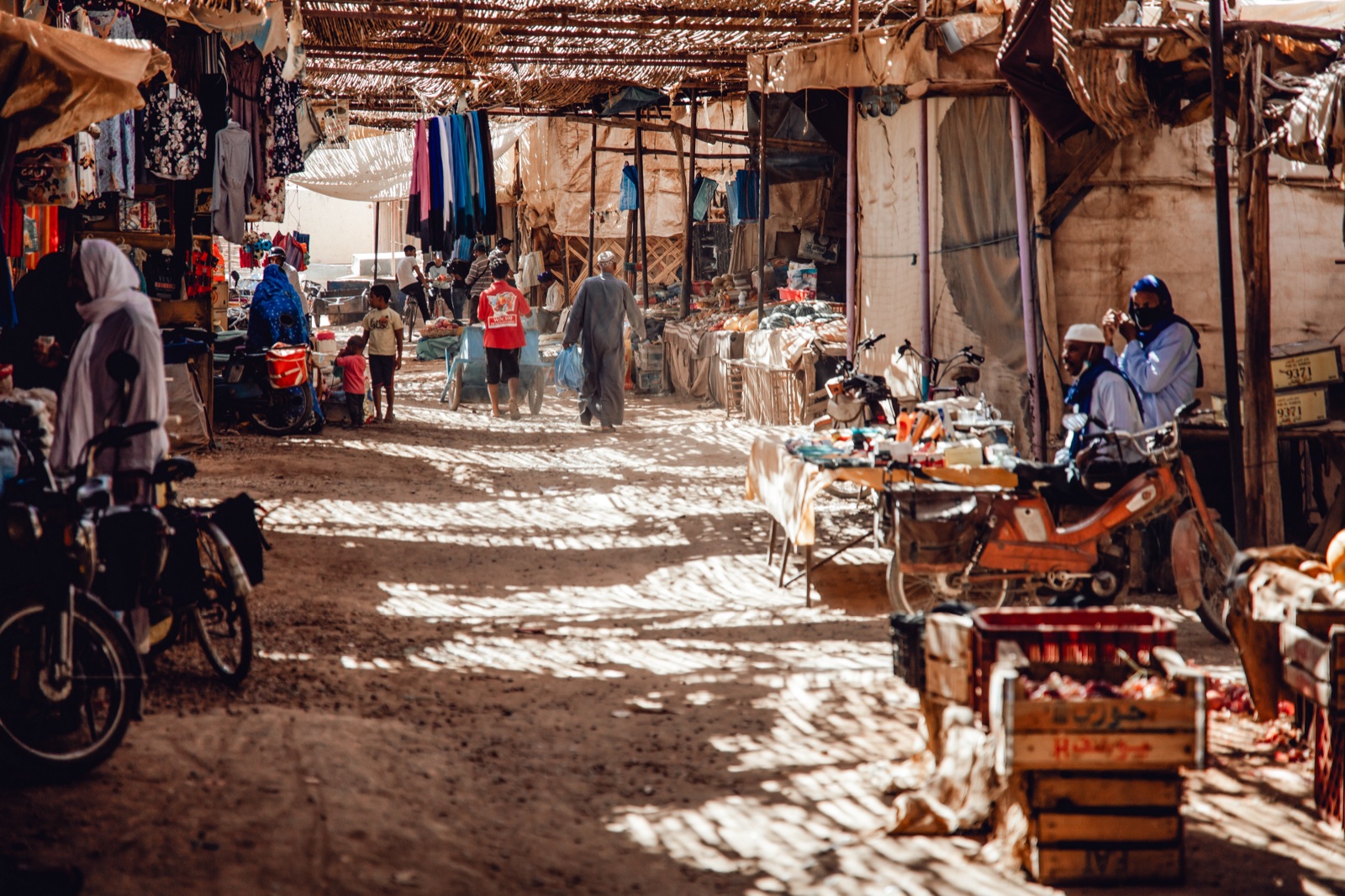
The road carries on south-east and the landscape turns to stony desert. We stop at Erfoud, capital of the fossil trade, and at Rissani, the old Sijilmasa from which the caravans left for the south. On market days we walk the souk, one of the most authentic in the country.
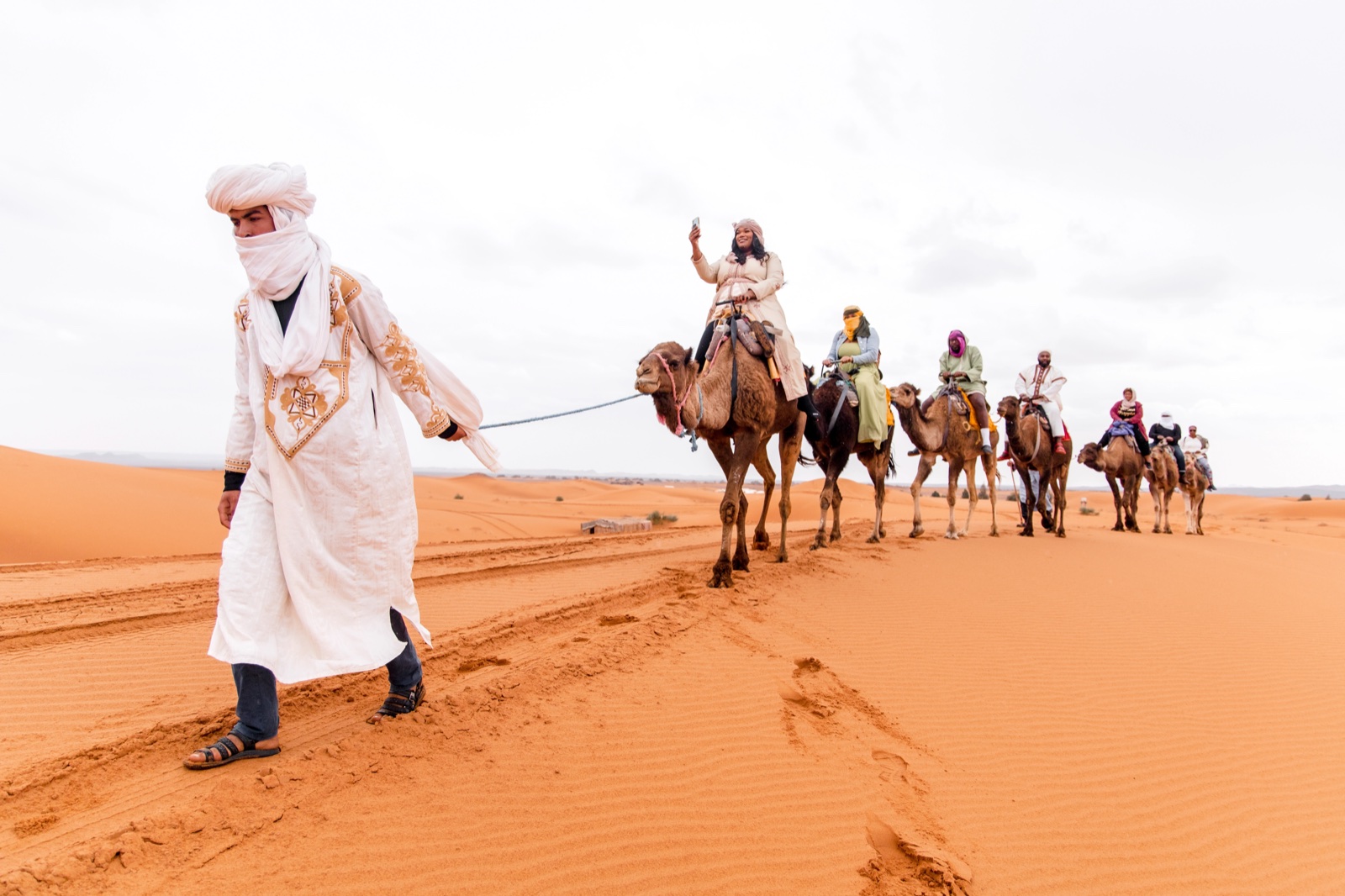
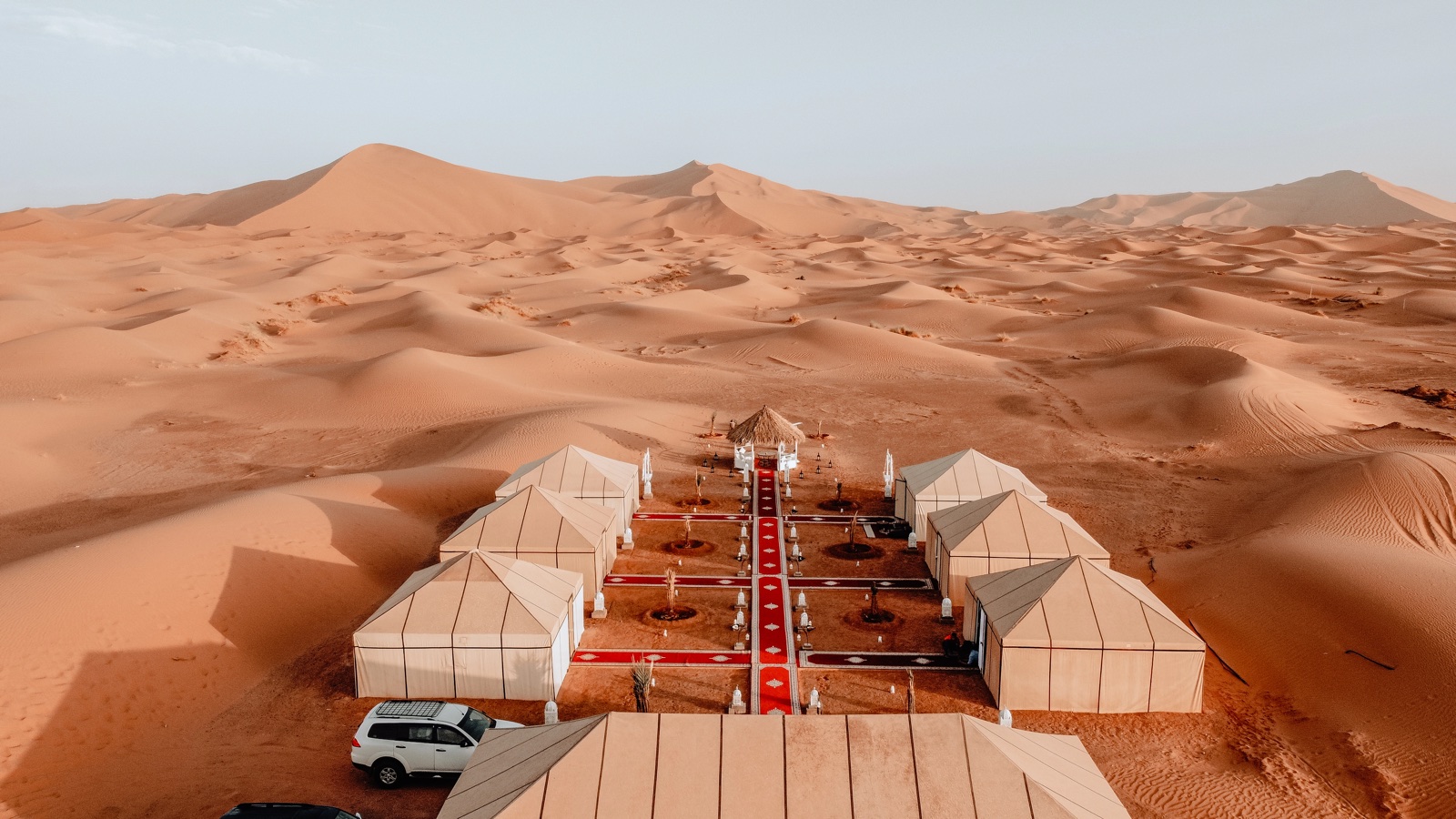
We arrive in Merzouga in the afternoon, mount the camels and ride into Erg Chebbi to the camp, with time to climb a dune before sunset. Berber dinner, music around the fire and a night in a tent.
Sunrise over the dunes, the moment almost everyone remembers. We ride back to the village, have breakfast and shower before setting off.
Today we head north on a different road from the one we came in on. We climb the Ziz valley, a corridor of palms tens of kilometres long wedged between rock walls. There is a viewpoint over the Ziz gorges where the whole palm grove opens out below.
We continue through Er Rachidia and Midelt, in the corridor between the High and Middle Atlas, apple country with old mine workings. Then we cross the cedar forest of Azrou, where Barbary macaques are often at the roadside, and pass Ifrane, a town of pitched roofs built by the French that people here call little Switzerland.
We reach Fez in the late afternoon and drop you at your riad in the medina or at the airport. It is a long driving day, around eight hours spread out with stops.