Do not hesitage to give us a call. We are an expert team and we are happy to talk to you.
1.8445.3356.33
Help@goodlayers.com
Five days to cross Morocco from Fez to Marrakech through the desert, with one night in the dunes and enough time in the southern gorges to walk rather than just look.
It sits between the quick three day run and the longer circuits: no road is repeated and no day is rushed.
Pick-up at your riad or hotel in Fez, or at its airport. We drop you in Marrakech.
Between 7:00 and 8:00 in the morning, depending on the season.
Five days north to south without doubling back. The first and last days carry the most driving; the middle three leave free afternoons.
We leave Fez in the morning and head south. Within an hour the landscape changes completely. We stop at Ifrane, the mountain town of pitched roofs and gardens the French built in the 1930s, which people here call little Switzerland.
Next is the cedar forest of Azrou, one of the last cedar woods left in the Mediterranean. We stop by the Gouraud Cedar, where troops of Barbary macaques gather, used to people and easy to watch, and take a short walk among the trees.
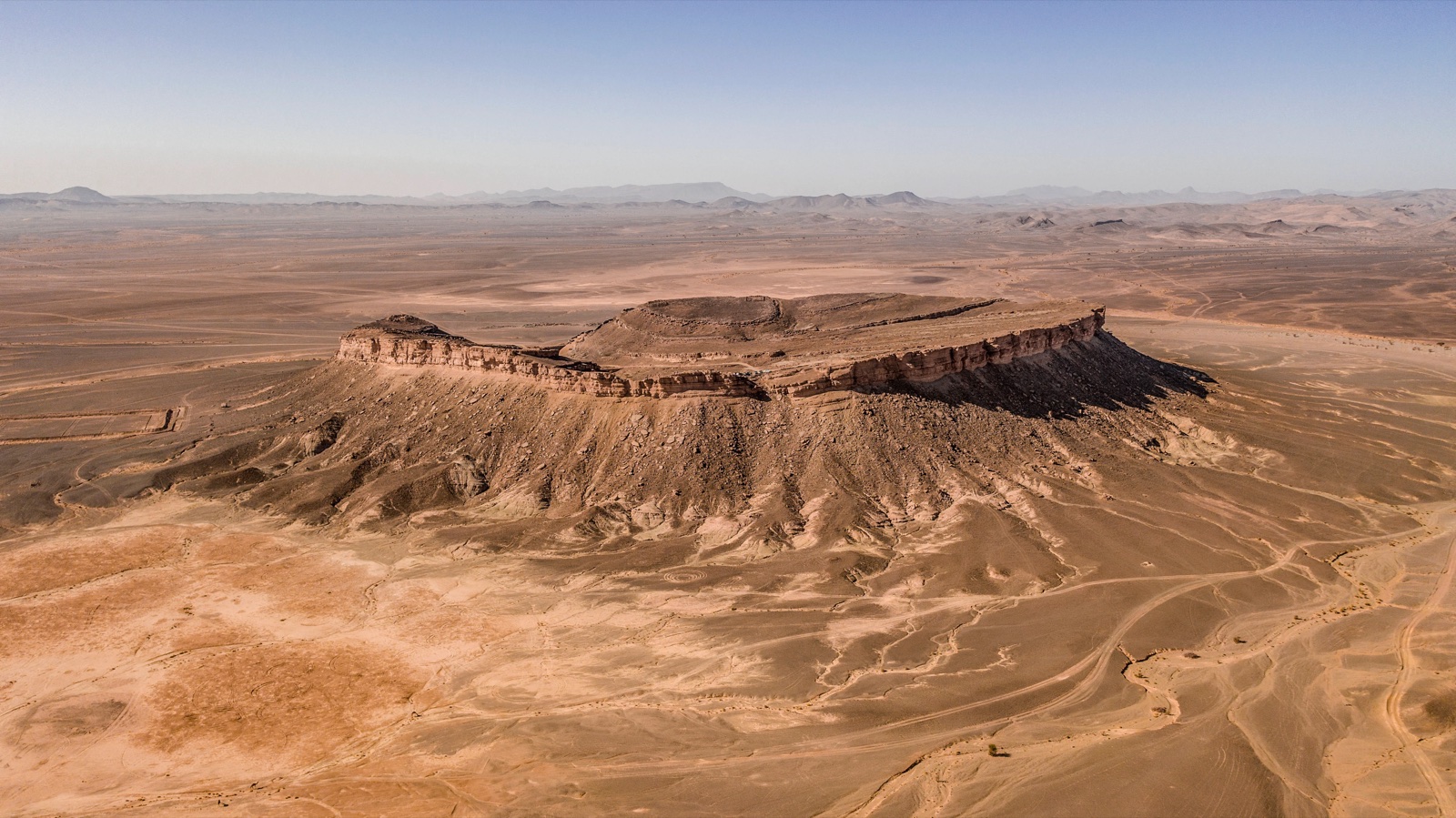
We cross the Middle Atlas at Midelt, in the corridor between the two ranges, apple country with old mine workings. From here the vegetation disappears and the stony plateaux begin.
The last part of the day runs down the Ziz valley, a palm grove tens of kilometres long wedged between rock walls, with a viewpoint where the river and the palms run out of sight.
Dinner and overnight in the Erfoud area, on the edge of the desert.
We start the morning in Erfoud, capital of the fossil trade, where blocks of marble are cut and polished with ammonites four hundred million years old.
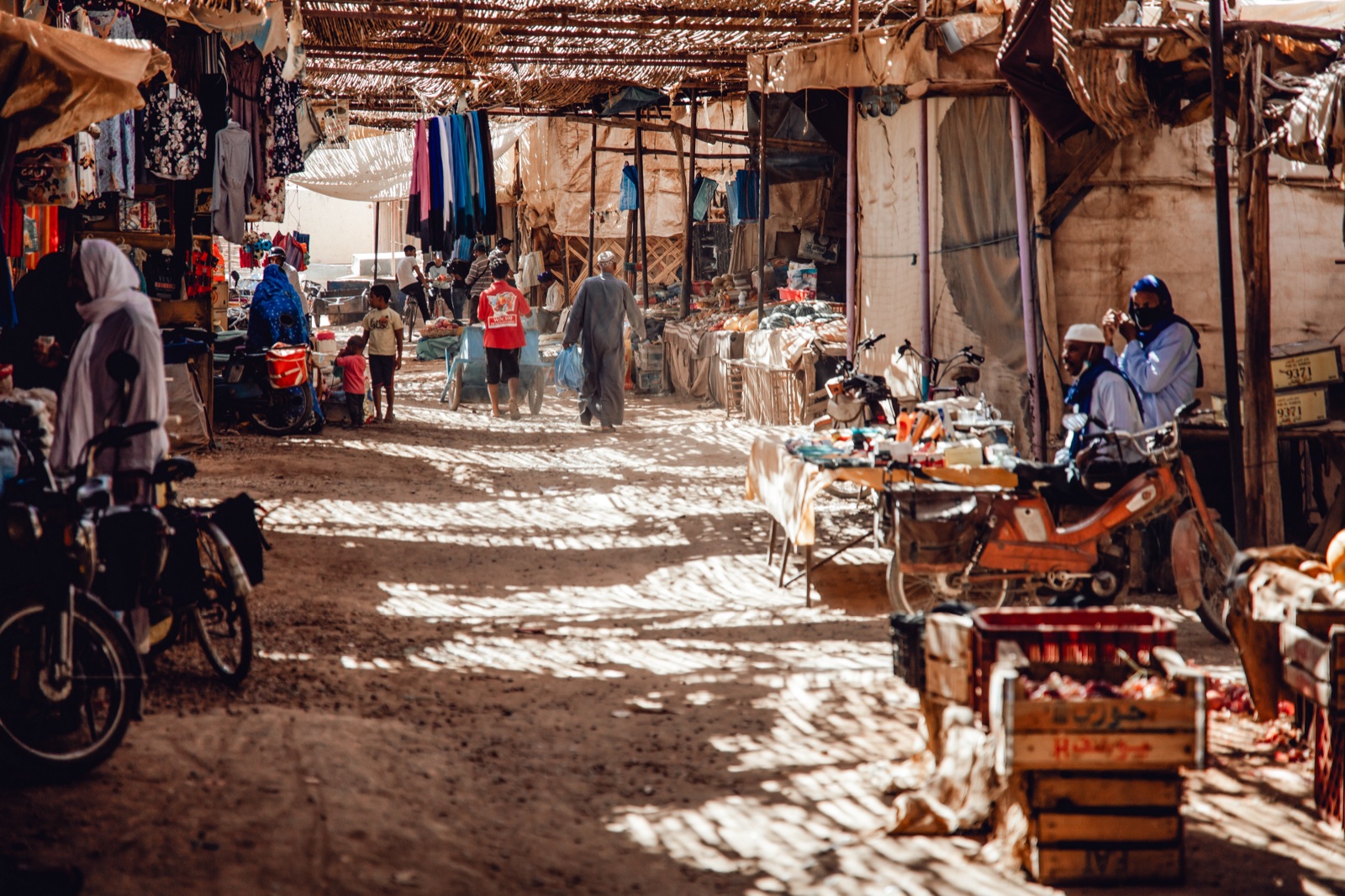
Then Rissani, built over the ruins of Sijilmasa, the caravan city the gold routes left from for Timbuktu. Its souk runs on Sundays, Tuesdays and Thursdays and is still a market for local people rather than visitors. We eat medfouna, the stuffed flatbread baked under hot sand.
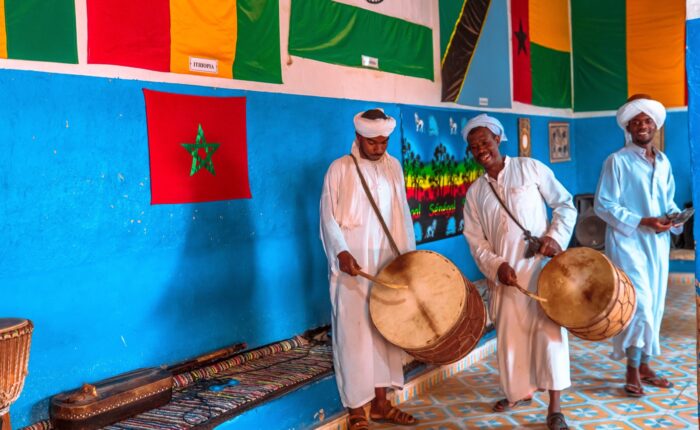
In the afternoon we move towards Merzouga and, depending on the season, out to Dayet Srji, the seasonal lake where flamingos stop in spring, or to Khamlia, where gnawa music is played live.
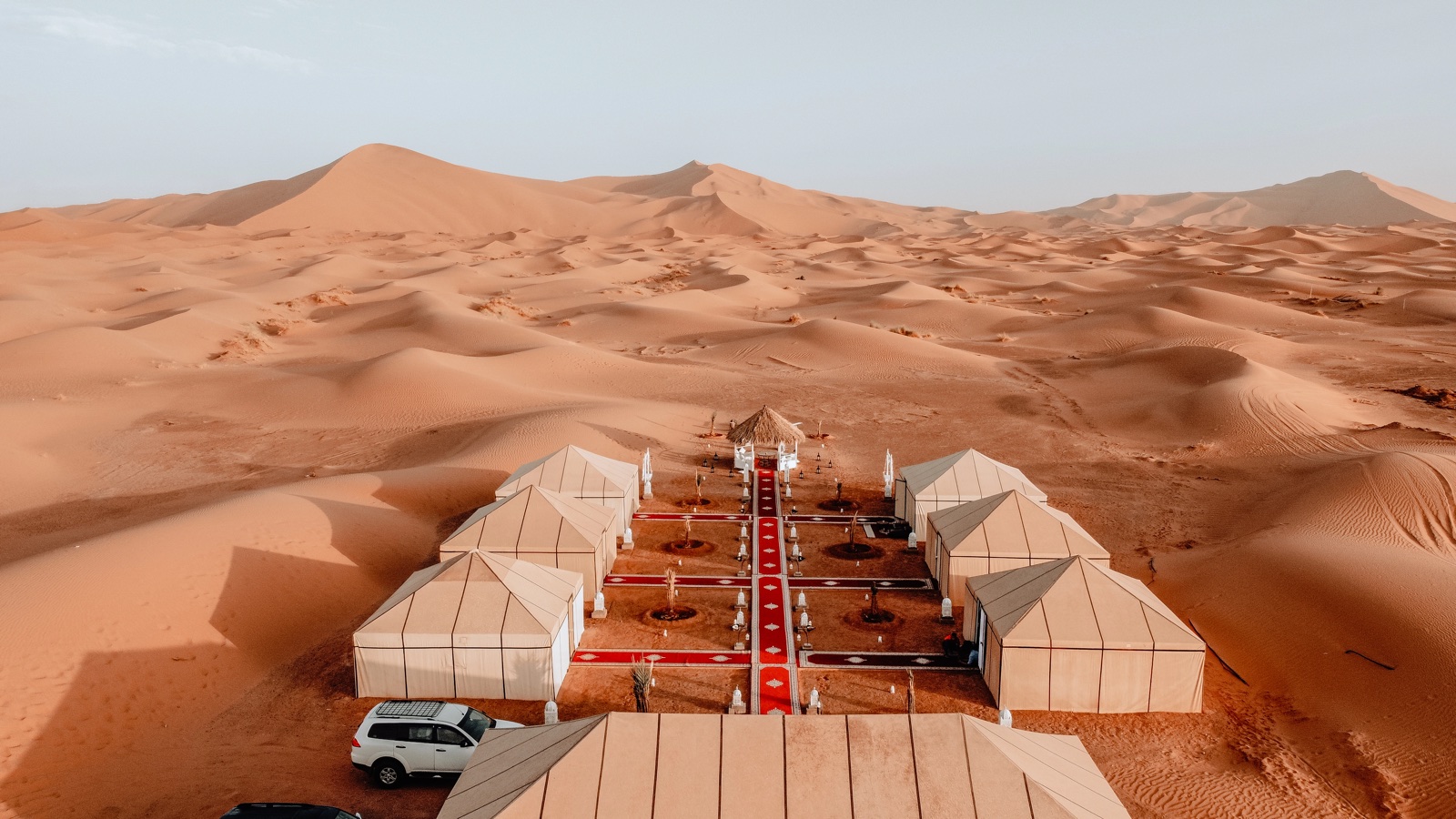
As the light drops we swap the car for a camel and ride into the dunes of Erg Chebbi, which reach 150 metres. An hour and a half in caravan brings us to camp, with time to climb a dune for sunset. Berber dinner, drums by the fire and a night in a tent under the stars.
Sunrise over the erg and a camel ride back to the village, then breakfast and a shower at the hotel before we head west.
We stop in Tinghir, a long oasis squeezed between bare mountains, and walk through the palm grove and the old adobe ksar above it.
We go into the Todra gorges: 300 metres of vertical wall and a gap of about ten metres with the river at the bottom. We walk along the floor in the shade, usually with climbers on the routes.
In the afternoon we drive up the Dades canyon with its switchbacks and monkey finger rocks. Dinner and overnight in the Dades valley.
An easy stage along the Road of a Thousand Kasbahs. We stop at Kelaat M Gouna in the rose valley, where Damascus roses have been grown for centuries and rose water is distilled in the village cooperatives.
On to the Skoura palm grove, a dense oasis hiding some of the best preserved kasbahs in the south, Amridil among them.
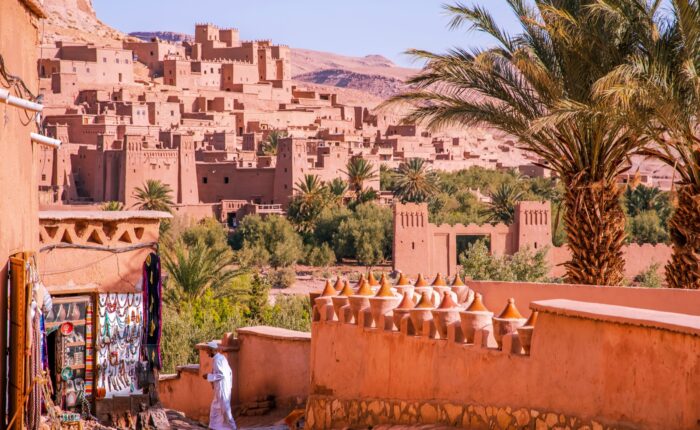
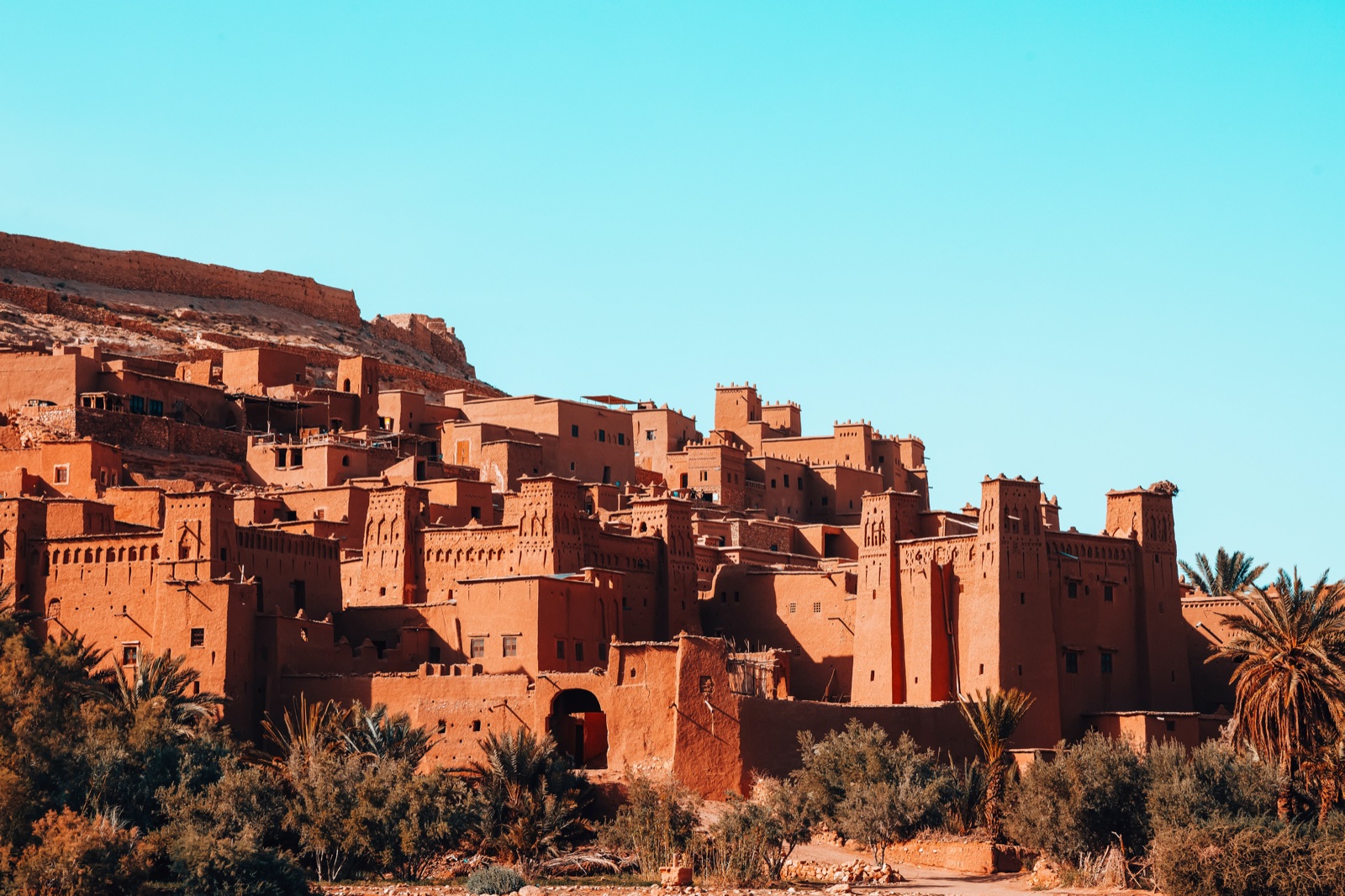
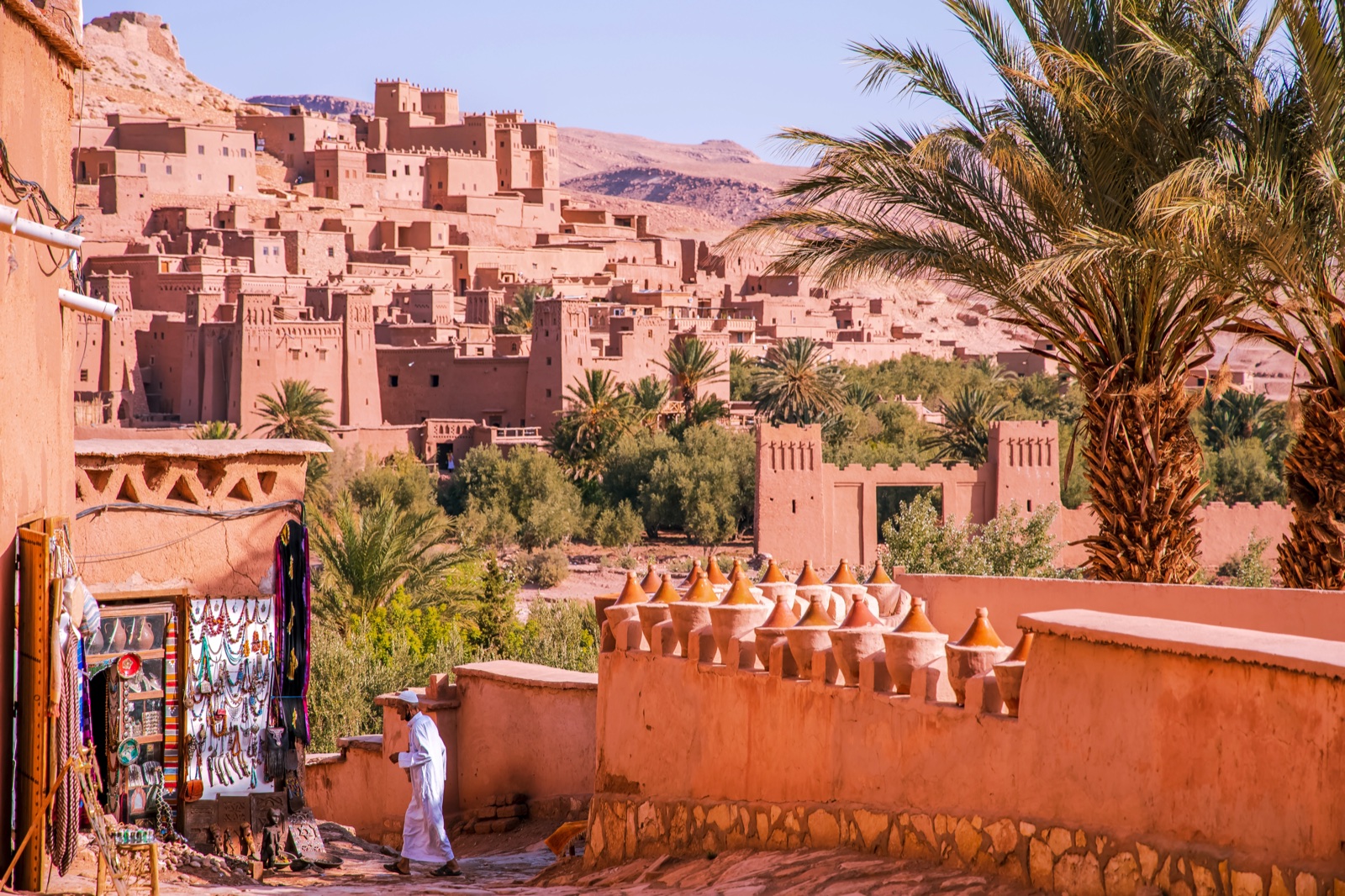
We pass Ouarzazate, with the Taourirt kasbah and the film studios, and reach Ait Ben Haddou with the afternoon light, which is when the ksar looks its best.
We cross the Ounila river and climb to the granary at the top. Dinner and overnight near the kasbah.
A last morning in the south. If you want the detour, we drive up the Ounila valley to the Telouet kasbah, the Glaoui family ruin with cedar ceilings and tiled rooms inside a building that is otherwise falling apart.
We cross the High Atlas by the Tizi n Tichka at 2,260 metres, stopping at the viewpoints for a final look at the southern slope.
Down through Berber villages and terraced fields to the plain, the range behind us.
We reach Marrakech around midday or early afternoon and leave you at your riad or at the airport, with plenty of margin for a flight the same day.